
City
Baku
This Baku travel guide introduces Azerbaijan’s Caspian capital through its UNESCO-listed Old City, waterfront promenades, contemporary architecture, museums, food culture, and easy day trips. It is designed for travellers deciding what to see, how long to stay, and how Baku fits into a wider Azerbaijan itinerary.
Quick Facts
Plan at a glance
- Best Season
- April–June and September–October
- Recommended Duration
- 2–3 days
- Distance from Baku
- 0 km
About this place
Baku at a glance
Baku sits on the western shore of the Caspian Sea, where a compact historic core meets broad boulevards, modern towers and neighbourhoods shaped by the city’s long role as a trading and energy centre. The contrast is visible within a short walk: sandstone walls and caravan-era streets give way to late nineteenth-century mansions, Soviet-era districts and recent civic architecture. For an international visitor, that layered cityscape is the main reason to spend more than a single night in the capital.
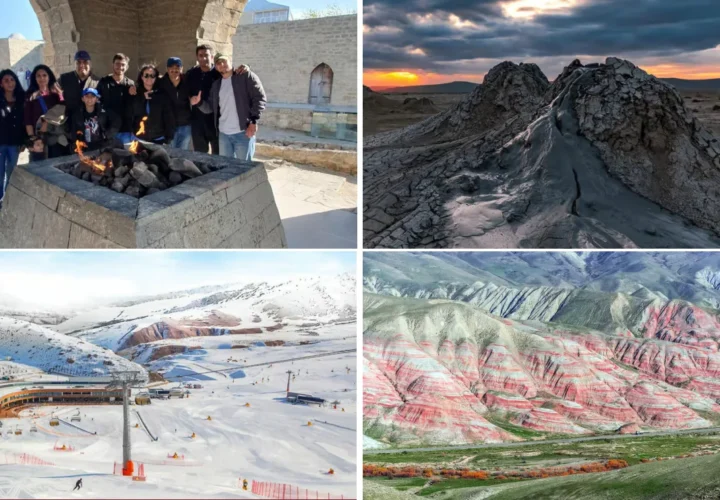
The city is also the practical starting point for many journeys around Azerbaijan. Rail, road and domestic travel connections radiate from Baku, while nearby places such as the Absheron Peninsula, Gobustan, Ateshgah and Yanar Dag make natural additions to a city stay. Rather than treating Baku only as an arrival point, it is more rewarding to use it as an introduction to the country’s history, food and contemporary culture.
Explore the Old City
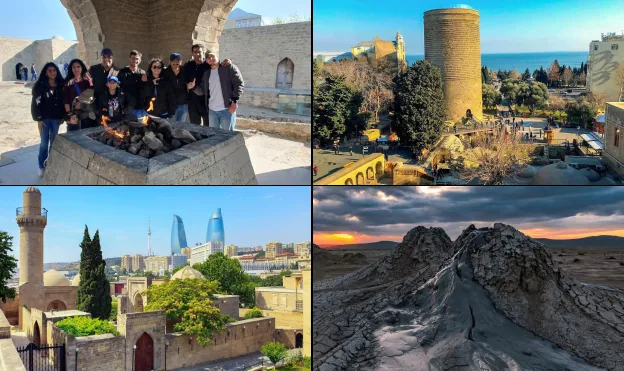
Icherisheher, the walled Old City, is the historical heart of Baku. Its narrow lanes contain mosques, bathhouses, merchant buildings, small courtyards and defensive walls that reveal several periods of urban life. The Palace of the Shirvanshahs and the Maiden Tower form part of the UNESCO-listed Walled City of Baku, offering useful context for the region’s medieval political and commercial history.
Allow time to wander beyond the principal monuments. Changes in stonework, carved balconies, doorways and small religious buildings are often easier to appreciate at walking pace. The Old City is compact, but its street pattern is irregular, so a slower visit gives a clearer sense of how the settlement developed inside its fortifications. From higher points near the walls, the view also shows how sharply modern Baku has grown around the historic centre.
Walk the waterfront and central districts
Baku Boulevard follows the Caspian waterfront and creates a broad public space between the city centre and the sea. It is useful for orientation: inland lie shopping streets, public squares and early oil-boom architecture, while the coast opens long views across the bay. The boulevard changes character along its length, combining landscaped areas, cultural buildings and quieter stretches for walking.
In the central streets behind the waterfront, look for the elaborate stone façades associated with Baku’s late nineteenth- and early twentieth-century oil era. European architectural influences were adapted to local limestone, creating a streetscape distinct from both the medieval core and later Soviet planning. Farther out, contemporary landmarks show another phase of the city’s development without erasing the older layers that visitors encounter closer to the centre.
Culture, museums and everyday Baku
Museums and cultural institutions help connect the city’s architecture with the wider story of Azerbaijan. Depending on your interests, useful themes include history, carpets and textile traditions, literature, art and the country’s musical heritage. A museum visit is especially valuable before travelling to regions where craft traditions, historical khanates and local identities become more visible.
Everyday Baku is equally important. Tea houses, bakeries, markets and neighbourhood restaurants offer a practical introduction to Azerbaijani hospitality and dining customs. Local menus often combine grilled meats, rice dishes, soups, herbs, vegetables and regional specialities. Rather than trying to cover every dish at once, leave room for several meals in different parts of the city and notice how the atmosphere changes between the Old City, central boulevards and residential areas.
When to visit and how long to stay
Spring and autumn are generally comfortable periods for urban walking, with milder conditions than the hottest part of summer and less exposure to winter wind. Baku is known for windy weather, so a light outer layer can be useful even when daytime temperatures appear mild. Summer suits travellers who enjoy long evenings and the Caspian setting, while winter gives the city a quieter seasonal character.
Two to three days is a practical first stay. One day can focus on Icherisheher and the central waterfront, a second on museums and modern districts, and an additional day can be used for deeper neighbourhood exploration or an excursion outside the city. Travellers with a week or more in Azerbaijan can then continue north toward Guba and Shahdag, west toward Gabala and Sheki, or south and southwest toward Gobustan.
Planning a wider Azerbaijan itinerary
Baku works well as the anchor of a circular or point-to-point route because several contrasting landscapes begin within a few hours of the city. Gobustan combines archaeological heritage with semi-desert scenery, the Absheron Peninsula adds fire-related sites and coastal landscapes, and the Greater Caucasus introduces forested foothills and high mountain settlements. Planning these areas as separate day trips or regional overnights keeps travel days manageable.
For a first visit, prioritize geographic variety rather than a long checklist. Baku provides the strongest urban and museum context; the next destinations can then add rock art, mountain villages, forested valleys or Silk Road-era architecture. That sequence helps the cultural details encountered later in the trip feel connected to a broader national story rather than isolated attractions.
Explore with Alov Travel
Tours for this area
Continue from inspiration to a relevant Azerbaijan experience connected to this place.
Plan the next step
Turn this place into part of your Azerbaijan journey.
Browse relevant experiences or share your dates and priorities with our local team.