
Mountain
Shahdag
Shahdag Azerbaijan brings travellers into the high Greater Caucasus, where steep valleys, open mountain slopes, seasonal snow, and alpine views create a sharp contrast with Baku’s Caspian landscape. This guide focuses on the mountain environment, year-round planning considerations, and how Shahdag connects with Guba and Khinalig on a northern Azerbaijan itinerary.

Gallery
See the place




1 / 4
1 / 4
Quick Facts
Plan at a glance
- Best Season
- December–March for snow; June–September for mountain scenery
- Recommended Duration
- 1 day or overnight
- Distance from Baku
- 210 km
About this place
Shahdag in the Greater Caucasus
Shahdag lies in northern Azerbaijan within the Greater Caucasus, a mountain system that defines much of the country’s northern horizon. The name is associated both with a major peak and with the surrounding highland area visited for mountain scenery and seasonal recreation. The route north from Baku gradually leaves the dry Caspian lowlands, crosses more fertile country and climbs toward valleys framed by increasingly steep ridges.
That transition is central to the experience. Travellers who begin in Baku, Gobustan or Absheron see a different side of Azerbaijan here: cooler air, deeper valleys, grass-covered slopes and snow at higher elevations during the colder season. Shahdag is therefore useful not only as a recreation stop but also as a landscape destination within a broader journey through the Caucasus.
Mountain scenery and seasonal character
In warmer months, the visual focus shifts to green slopes, rocky summits and long views across the valleys. Mountain weather can change faster than conditions in the lowlands, so layers are useful even when the day begins warm. Clear mornings often provide the strongest visibility, while cloud can gather around ridges and reshape the scenery quickly.
Winter brings a different character, with snow becoming the main feature of the upper landscape and organized resort activity centered around the developed mountain zone. Because services and operating conditions can change between seasons, evergreen planning should focus on the environment rather than fixed facility lists. Travellers interested in a particular activity should confirm current local conditions separately before departure.
What to do beyond a single viewpoint
A Shahdag visit can be as simple as spending time in the mountain setting, taking short walks in suitable areas and stopping at viewpoints along the approach. Travellers who enjoy photography should allow enough time for changing light rather than treating the mountains as a quick roadside stop. Broad compositions that include valley floors, settlement patterns and upper ridges convey scale better than isolated summit images.
Where marked recreational routes or locally managed activities are available, choose options appropriate to your experience and the season. High mountain terrain deserves more caution than an urban excursion. Weather, snow cover and trail conditions can change, and a route that is straightforward in summer may be entirely different in winter.
Shahdag, Guba and Khinalig
Guba is the main regional city connection in the Phase 1 Explorer cluster. Its lower elevation, orchards, nearby forests and cultural sites create a natural first stop before the road climbs farther into the mountains. Using Guba as a regional base can also make it easier to separate a relaxed city visit from a longer highland excursion.
Khinalig is another important mountain relationship, but it should not be treated as part of the same attraction. The village has its own cultural identity, architecture and high-altitude setting. Roads toward different mountain areas can require significant travel time, so travellers should plan Shahdag and Khinalig according to route logic rather than assuming every northern landmark can be combined comfortably in one short day.
When to visit
The season depends on what you want from the mountains. Winter is associated with snow and cold-weather recreation, while late spring through early autumn is better suited to green landscapes, scenic driving and lower-risk outdoor exploration. Even in summer, temperatures at elevation can be cooler than in Baku, especially after sunset or when cloud covers the slopes.
A day trip from the north-coast route is possible, but an overnight stay gives more flexibility for weather and reduces the pressure to drive long distances after dark. Travellers continuing to Khinalig or deeper into the Greater Caucasus should leave room in the itinerary for road conditions and short scenic stops.
Planning responsibly in mountain terrain
Carry water, an extra layer, sun protection and footwear suitable for uneven ground. If snow, fog or heavy rain affects visibility, adjust the plan rather than forcing a viewpoint or outdoor route. Mobile coverage and roadside services may be less predictable away from main developed areas, so mountain travel benefits from more preparation than a central Baku walk.
For a balanced Azerbaijan itinerary, Shahdag works especially well after several days in Baku or the Caspian lowlands. The change in elevation and climate makes the journey itself part of the destination, while connections with Guba and Khinalig reveal how landscape, settlement and local culture interact across northern Azerbaijan.
Explore with Alov Travel
Tours for this area
Continue from inspiration to a relevant Azerbaijan experience connected to this place.
 Explore
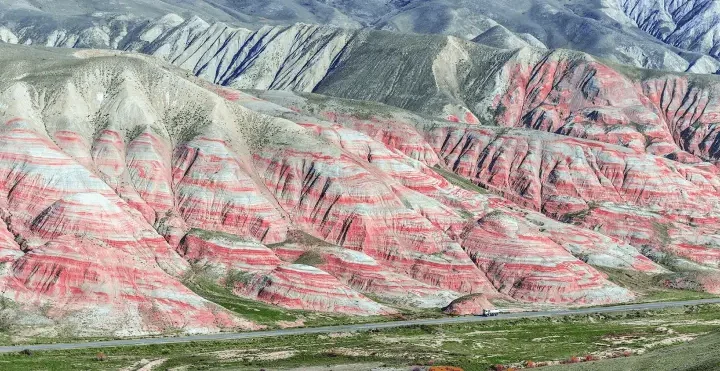
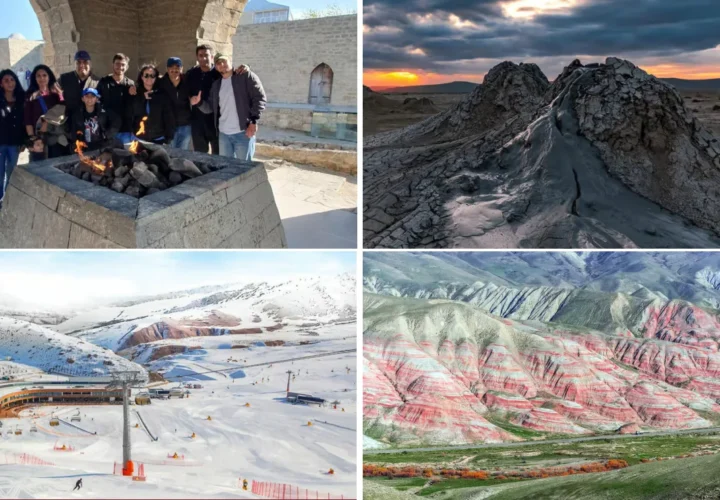
Shahdag and Candy Cane Mountains Tour from Baku
Escape Baku for a full-day journey through the colorful Candy Cane Mountains, scenic Beshbarmag, the forests of Gachresh…
 Explore
Plan the next step
Turn this place into part of your Azerbaijan journey.
Browse relevant experiences or share your dates and priorities with our local team.