
City
Gabala
This Gabala Azerbaijan travel guide introduces a green Greater Caucasus foothill destination with mountain views, forested surroundings, lakes, archaeological heritage, and easy access to nearby villages. Gabala suits travellers who want nature and regional history within a comfortable stop between Baku and northwestern Azerbaijan.
Quick Facts
Plan at a glance
- Best Season
- April–October
- Recommended Duration
- 1–2 days
- Distance from Baku
- 215 km
About this place
Gabala between foothills and mountains
Gabala, also written Qabala, lies in northwestern Azerbaijan at the southern foothills of the Greater Caucasus. The modern town is surrounded by greener landscapes than the Caspian lowlands, with wooded slopes and mountain views shaping the region’s atmosphere. For travellers moving between Baku and Sheki, it offers a useful pause focused on nature, regional history and slower outdoor time.
The name also carries a much older historical association. Ancient Gabala served as an important centre of Caucasian Albania, a historical polity of the eastern Caucasus. Archaeological remains in the wider district connect the modern destination with centuries of settlement, trade and political change.
Mountain scenery and outdoor stops
The main visual attraction is the relationship between the foothills and the high Greater Caucasus behind them. Roads around the district pass forested areas, river valleys and open viewpoints. Travellers do not need a strenuous hike to appreciate the landscape; short walks and carefully chosen scenic stops can provide enough variety for a relaxed day.
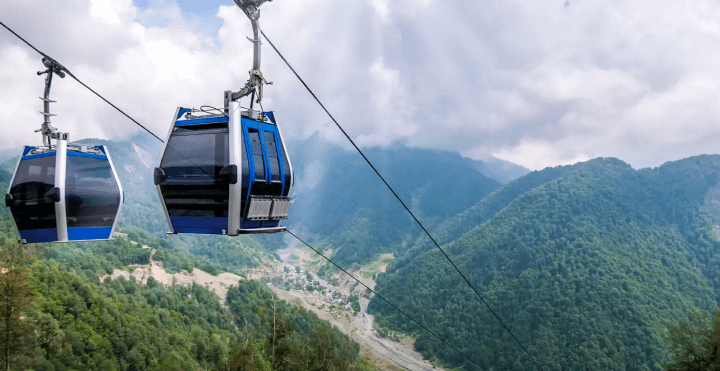
Mountain recreation zones around Tufandag offer access to elevated views and seasonal activities, but specific operations can change. Evergreen planning should therefore describe the mountain setting without relying on fixed service lists. Visitors interested in a particular cable route or activity should confirm current local information separately.
Nohur Lake and quieter landscapes
Nohur Lake, near Gabala, is a calm water-and-mountain landscape that works well as a short stop between larger activities. The lake is more about scenery and atmosphere than major monuments. Reflections, wooded slopes and distant ridges create strong photography in clear conditions.
As with many popular local recreation areas, the experience can vary by season and day. Travellers who prefer quieter observation can focus on the landscape rather than optional commercial activities around the shore. Keeping the stop flexible makes it easy to combine with forests, villages or heritage sites elsewhere in the district.
History beyond the modern town
The archaeological area associated with ancient Gabala provides a very different experience from the modern resort-oriented destination. Ruins and excavation zones require more imagination than a fully preserved palace, but they help explain the region’s long-standing strategic importance between mountain routes and lower plains.
Travellers interested in history should pair archaeological context with museum interpretation where available. This can clarify the difference between Caucasian Albania and modern Albania in the Balkans, two unrelated historical-geographic names that can otherwise cause confusion for first-time visitors.
Villages and cultural diversity
The wider Gabala region includes villages with distinct local traditions and communities. Nij is known for its Udi cultural heritage, representing one of the Caucasus’s longstanding Christian communities. A respectful visit can add valuable cultural context when approached through local interpretation rather than treating community identity as a sightseeing object.
Rural roads also reveal orchards, gardens and everyday agricultural life. These scenes may feel less dramatic than mountain viewpoints, but they help explain how the district functions beyond tourism. Leaving some unstructured time for a meal or village stop can make a regional visit feel more grounded.
When to visit and how long to stay
Spring through autumn works well for most outdoor exploration, with late spring and early autumn offering moderate temperatures. Summer is greener than the lowlands but can still be warm in the valleys. Winter brings colder conditions and snow at higher elevation, changing the character of mountain activities.
One full day covers a selective combination of town, lake, mountain scenery or archaeology. Two days allow visitors to separate nature from cultural stops and avoid excessive driving. Gabala can also serve as an overnight point on the way to Sheki, which lies farther west and has a stronger concentration of preserved urban heritage.
Building Gabala into an Azerbaijan route
From Baku, Gabala introduces the greener western side of the country after several hours on the road. Continuing to Sheki creates a logical progression from mountain foothills and lakes toward caravan-route architecture and historic urban fabric. Travellers with more time can then continue deeper into northwestern Azerbaijan.
Compared with Guba and Shahdag in the north, Gabala offers a different mountain relationship: lower foothills, forests, lakes and regional heritage rather than high alpine settlement. Including both regions in a longer itinerary shows how varied the Greater Caucasus can be across Azerbaijan.
Choosing a balanced day
Gabala’s attractions are dispersed, so a useful day is built around two or three themes rather than a long list. One option is to combine a mountain viewpoint with Nohur Lake and a relaxed meal. Another is to pair archaeology with a village visit and a shorter nature stop. Grouping places geographically reduces time spent in the vehicle and leaves more space for walking and observation.
Families and mixed-interest groups can also divide the day without losing the regional story: some travellers may prefer gentle lakeside scenery, while others spend more time with archaeological interpretation or forest roads. The destination works well when the itinerary respects its spread-out character instead of forcing every activity into a tight sequence.
Explore with Alov Travel
Tours for this area
Continue from inspiration to a relevant Azerbaijan experience connected to this place.
 Explore
Gabala and Shamakhi Tour from Baku: Nohur Lake, Waterfall & Tufandag
Discover the beauty of Azerbaijan with this full-day Shamakhi and Gabala group tour. Explore ancient mosques, scenic mountains,…
Plan the next step
Turn this place into part of your Azerbaijan journey.
Browse relevant experiences or share your dates and priorities with our local team.